Book Commercial Electrical Inspection Services: 2026 Guide

Table of Contents
Why Booking a Commercial Electrical Inspection Protects Your Business
What Happens During a Commercial Electrical Inspection
Key Areas Inspectors Evaluate
Your Commercial Electrical Inspection Checklist
How Much Does a Commercial Electrical Inspection Cost?
What Actually Drives the Price
The Cost-Benefit Math Most Owners Skip
Electrical Safety for Retail Business Owners
How to Book Commercial Electrical Inspection Services: Step by Step
Permits, Scheduling, and What to Have Ready
After the Inspection: Fixing Code Violations and Staying Compliant
A Remediation Roadmap
Digital Documentation and Record-Keeping
Industry-Specific Nuances
Frequently Asked Questions
Last Updated: September 20, 2026
Why Booking a Commercial Electrical Inspection Protects Your Business
A commercial electrical inspection is a professional assessment of a building's electrical systems to confirm they meet current safety codes and function reliably. For business owners, it is one of the cheapest forms of insurance against downtime, fines, and liability.
Most owners only call an electrician when something breaks. That is the wrong model. By then, the damage is done: a failed panel, a shutdown, or a citation from the building department.
At Elecstroman Electric, we work with retail stores, financial institutions, and federal contractors across the Carolinas, and the pattern is always the same.
Key Takeaway A scheduled inspection turns electrical risk from a surprise into a line item you can plan for.
What Happens During a Commercial Electrical Inspection
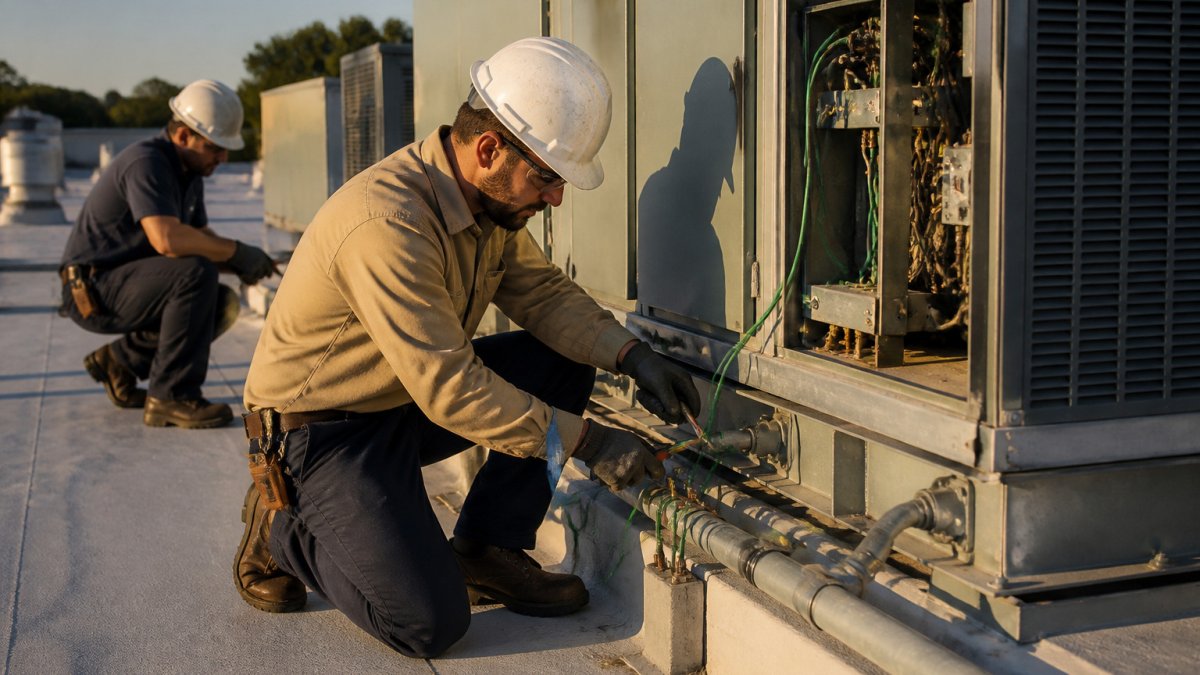
A licensed inspector walks your facility and tests the electrical system from the service entrance to the final outlets, documenting every finding in a written report. The visit typically takes one to three hours for a small retail space and longer for industrial sites.
Key Areas Inspectors Evaluate
Service entrance and metering: capacity, clearances, and weather sealing
Circuit breaker panels: labeling, breaker sizing, and signs of heat damage
Wiring integrity: insulation condition, proper supports, and junction box covers
Grounding and bonding: the path that protects people and equipment during a fault
Load calculations: whether your current demand matches the panel's rating
GFCI and AFCI protection: required in specific commercial areas
Emergency and exit lighting: function and battery backup
Fire safety standards: clearance around panels and proper conduit use

Your Commercial Electrical Inspection Checklist
Use this checklist before the inspector arrives. It saves time and often catches the small issues you can fix yourself.
Panel covers secured and all breakers labeled clearly
At least 3 feet of clear space in front of every panel
No daisy-chained power strips or extension cords in permanent use
Junction boxes covered and accessible
GFCI outlets tested in kitchens, restrooms, and outdoor areas
Exit signs and emergency lights tested within the last 30 days
Any known flickering, tripping, or burning smells documented
Previous inspection report and permits on hand
Pro Tip Document everything with dated photos before the visit. If a violation is disputed later, a photo log with timestamps settles the question faster than memory.
How Much Does a Commercial Electrical Inspection Cost?
Pricing for a commercial electrical inspection depends on square footage, system complexity, and the scope of testing required. A single retail suite with one panel prices differently than a multi-tenant building with switchgear and backup power. Because of that, no honest contractor quotes a flat number before seeing the site.
What Actually Drives the Price
Building size and panel count. Inspectors often price per square foot plus a per-panel adder, so a 5,000-square-foot office with one panel and a 5,000-square-foot restaurant with three panels and a rooftop unit do not price the same.
Access to service equipment and crawl spaces. A locked electrical room, a sealed ceiling, or a crawl space that requires a ladder and a flashlight adds labor hours before any testing begins.
Whether thermal imaging or load testing is included. Infrared scanning of panels and a load bank test are separate scopes with separate equipment and separate line items.
Urgency. After-hours, weekend, and emergency visits carry premium rates because the inspector is displacing other work.
Reporting requirements for lenders, insurers, or regulators. A one-page pass/fail letter costs less than a full narrative report with photo documentation and code citations.
Re-inspection fees. If the first visit finds violations, the return trip to verify corrections is usually billed separately.
The Certified Commercial Property Inspectors Association pricing guide outlines square-footage-based methods that many inspectors use to build quotes. Those methods explain why two similar buildings can receive very different numbers.
The Cost-Benefit Math Most Owners Skip
Key Takeaway Budget the inspection as a fixed operating cost, not a one-time project. The facilities that treat it that way are the ones that stop paying emergency premiums.
For an accurate figure, request a quote based on your actual facility rather than comparing flat rates online. Give every provider the same scope so the numbers are comparable.
Electrical Safety for Retail Business Owners
Electrical safety for retail business owners comes down to two realities: you cannot afford a shutdown during business hours, and you cannot afford a fire. Retail spaces carry unique risks that offices do not.
Watch Out Running space heaters or display lighting off a daisy-chained power strip is one of the most common causes of retail electrical fires. The strip overheats before the breaker ever trips.
How to Book Commercial Electrical Inspection Services: Step by Step
Booking a commercial electrical inspection takes five steps: define the scope, verify the inspector's credentials, request quotes, schedule the visit, and prepare the site. Most owners can complete the first three in a single week.
Define the scope. Decide whether you need a full property assessment, a single-system check, or documentation for a lender or insurer.
Verify credentials. Confirm the inspector holds a current license and carries liability insurance. A certified electrical inspector should be able to produce both on request.
Request quotes from at least two providers. Give each the same scope so the numbers are comparable.
Schedule the visit. Ask how long the inspection takes and when you will receive the report.
Prepare the facility. Use the checklist above and clear access to all panels.
Permits, Scheduling, and What to Have Ready
An electrical permit is separate from an inspection. Permits authorize new work; inspections verify it. If your project involves new circuits, panel upgrades, or an occupancy permit, the building department will require a permit before work begins.
Have these ready before the inspector arrives:
Current certificate of occupancy
Any open permits and their approval status
Previous inspection reports
A contact who can answer questions about recent electrical work
After the Inspection: Fixing Code Violations and Staying Compliant
Fixing code violations follows a defined order: address life-safety issues first, then system deficiencies, then documentation gaps. Your report will rank findings, and that ranking should drive your repair schedule. What most guides skip is what happens between the report landing on your desk and the file being closed, that is where the real work lives.
A Remediation Roadmap
Triage the report. Separate findings into three buckets: life-safety (grounding, overcurrent protection, exposed conductors), operational (undersized circuits, worn receptacles, missing covers), and documentation (panel labeling, missing permits, expired test records). Life-safety items get scheduled first, even if they are the most expensive.
Get a written scope for each repair. Ask the contractor to cite the specific code section for each fix. This prevents upsells and gives you a paper trail if a regulator or insurer asks why a repair was done.
Pull permits where required. New circuits, panel replacements, and service upgrades generally need a permit before work begins. Skipping the permit saves a few dollars now and creates a much larger problem at sale, refinance, or insurance renewal.
Schedule the re-inspection. Most jurisdictions require the original inspector or the building department to verify corrections. Build that return visit into your timeline rather than assuming the repair closes the file.
Close the loop in writing. Get a signed correction report or a clean re-inspection notice. Without it, the violation stays open in the record even if the physical work is done.
Minor items, like missing panel labels, are often corrected the same day. Serious findings, such as an undersized service or failed grounding, require a licensed contractor and may need a permit and re-inspection.
Digital Documentation and Record-Keeping
Paper reports get lost. A digital compliance log does not. Keep a single folder, cloud-based is fine, with the following for every inspection cycle:
The dated inspection report, including photos of each finding
The correction scope and the contractor's invoice for each repair
Permit numbers and approval dates
The final re-inspection notice or sign-off
A one-page summary you can hand to an insurer, lender, or buyer
Industry-Specific Nuances
Remediation priorities shift by facility type. Retail spaces tend to fail on temporary wiring, daisy-chained power strips, seasonal decor circuits, and display lighting that was never load-calculated. Industrial sites fail more often on grounding, bonding, and motor circuit protection. Office buildings fail on panel labeling, GFCI coverage in break rooms and restrooms, and emergency lighting that has not been tested.
Pro Tip Set a recurring reminder for your next inspection the day you receive the current report. Facilities on a fixed cycle rarely get surprised by violations, and when they do, the remediation log already shows a pattern of good faith.
Frequently Asked Questions
How much does a commercial electrical inspection cost?
Pricing depends on building square footage, system complexity, and scope. A small retail space with a single panel may differ in cost from a multi-tenant facility with switchgear and emergency systems. Request a written quote that itemizes what is covered so you can compare bids fairly.
What is included in a commercial electrical inspection?
A typical inspection covers the service entrance, main distribution panels, branch circuits, grounding and bonding, overcurrent protection, and labeling. Inspectors also check for code violations under the National Electrical Code, test GFCI and AFCI devices, and may use thermal imaging to find hot spots. The final report should list deficiencies by priority so you know what needs immediate repair versus scheduled maintenance.
How often should a commercial building have an electrical inspection?
Most facilities benefit from an annual electrical safety audit, though high-load environments like commercial kitchens, data centers, and manufacturing floors may need inspections every six months. Insurance carriers and local building departments sometimes set their own intervals. After any major renovation, panel upgrade, or EV charger installation, schedule a fresh inspection to confirm the work meets current code.
Can I do my own electrical work and have it inspected?
In most jurisdictions, commercial electrical work must be performed by a licensed electrician and permitted through the local building department. Some areas allow homeowners to pull permits for residential work, but commercial projects almost always require a licensed contractor. A third-party inspection verifies that the installation meets NEC requirements and local amendments, which protects you during insurance claims and property sales.
Request a Quote

Comments