How to Audit Federal Building Electrical Systems Step by Step

Quick Summary
To audit federal building electrical systems, define a written scope, review existing drawings and maintenance records, walk the site to inspect equipment, and test conditions that cannot be seen. Map each finding to applicable federal and code requirements, then rank corrections by risk.
Get the facility owner to sign off on a short written scope statement before the walkthrough.
Compare as-built drawings and panel schedules to the installed circuits, since they often differ.
Map each finding to federal and code requirements such as GSA standards and NFPA 70 and 70E.
Follow NFPA 70E safety rules, using lockout/tagout and arc-rated PPE for any energized work.
Rank findings by risk, with safety hazards first, and track each recommendation until it is closed.
Is your federal building's electrical system audit-ready?
Elecstroman Electric audits federal electrical systems to code and security standards.
Table of Contents
How to Audit Federal Building Electrical Systems: Scope and Purpose
Last Updated: November 22, 2026
An electrical audit has a defined scope. It covers service entrance and distribution equipment, panelboards, switchgear, transformers, branch circuits, grounding, emergency and standby power, and the loads those systems serve.
Federal energy and water auditing requirements add a second layer. The Federal Energy Management Program encourages agencies to improve the value of each audit relative to its cost, and it recommends alternative methods to do that. Federal Energy Management Program guidance on energy and water audits for federal buildings
The scope should be written down before anyone walks the building. Define the buildings, systems, time period and deliverables in a short scope statement, and get the facility owner to sign off on it.
Step 1: Plan the Audit and Review Existing Documents
Start with paperwork. Most of the risk in an audit is found in the drawings, load records and maintenance history you collect before you ever open a panel.
Gather these documents first:
As-built one-line diagrams and panel schedules
Equipment nameplate data and manufacturer manuals
Utility billing and metering data for the past 12 to 24 months
Compare the drawings to what is installed. Field conditions often differ from the original design, and a panel schedule that no longer matches the circuits is a common finding.
Federal Requirements Mapped to Electrical Systems
Federal projects are governed by more than one rulebook. Map each requirement to the electrical system it affects before the walkthrough:
Facility standards: GSA's Core Building Standards define mandatory laws, regulations and codes for projects under design and construction. GSA Core Building Standards for the Public Buildings Service
Energy and water audit rules: These set the audit frequency and reporting expectations for agency buildings. FEMP energy and water audits for federal buildings
Building codes and installation standards: The National Electrical Code (NFPA 70) and the NFPA 70E electrical safety standard apply to most installed systems and work practices.
Write each requirement next to the system it governs. That table becomes the backbone of your findings.
The table below lists the federal requirement sources to map against each electrical system before the walkthrough.
Requirement source | Governs | Purpose |
GSA Core Building Standards | Projects under design and construction | Mandatory laws, regulations and codes |
FEMP energy and water audit rules | Agency buildings | Audit frequency and reporting expectations |
NFPA 70 and NFPA 70E | Installed systems and work practices | Installation standards and electrical safety |
Owning agency criteria | Mission-critical or defense facilities | Added requirements such as Unified Facilities Criteria |
Step 2: Conduct the Site Inspection and Walkthrough
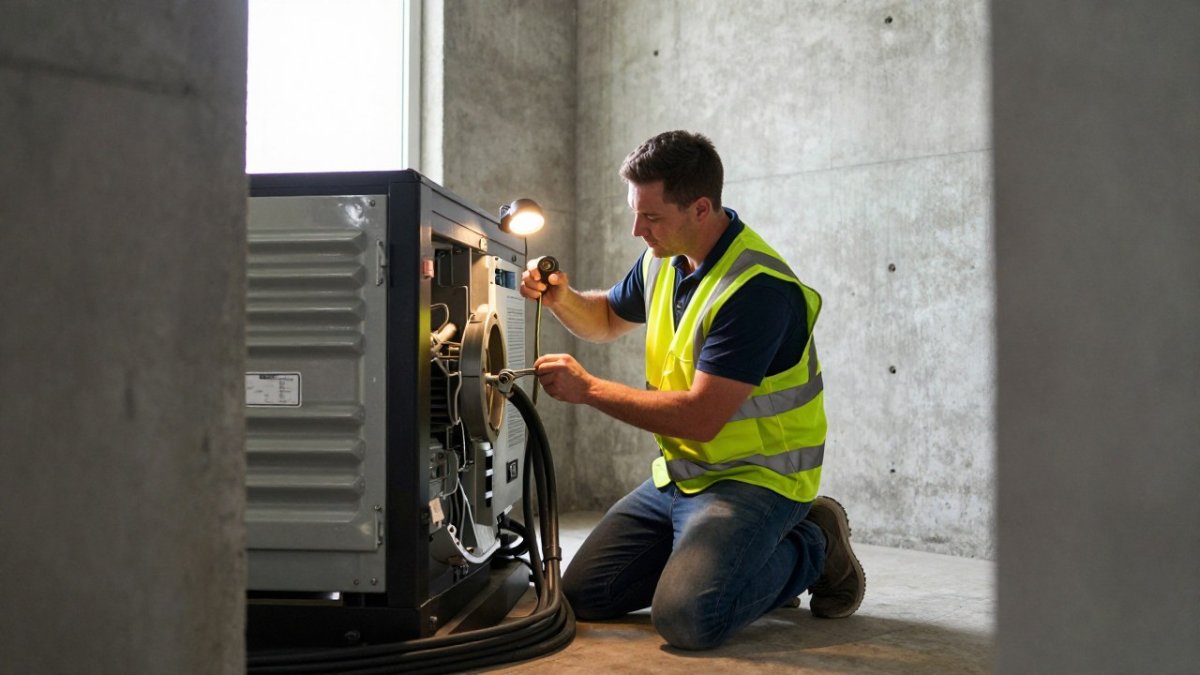
The walkthrough confirms what the documents say. Walk every electrical room, mechanical space and tenant area in the audit scope. Note panel labeling, clearances, working space, signs of overheating, damaged insulation, missing covers and water intrusion.

Work in this order:
Verify the service entrance and main disconnect.
Check each distribution panel and compare its schedule to the installed circuits.
Inspect transformers, switchgear and emergency power transfer equipment.
Look for signs of heat, corrosion, loose connections and deteriorated conductors.
Record load information where it is posted and confirm it with the owner.
Photograph everything you record. Those photos are what the facility team will use to act on your findings.
Equipment-Level Inspection Points
A general walkthrough misses the conditions that drive most federal electrical findings. Inspect each asset class against the points below and record the condition, not just the presence, of each item.
Service entrance and main switchgear: Confirm the main disconnect is labeled and accessible, check for a current short-circuit and coordination study, verify working clearance in front of the gear, and look for discoloration, arcing marks or loose lugs. Confirm the available fault current is marked and still matches the gear rating.
Panelboards and distribution boards: Compare every panel schedule to the installed circuits, check for missing or mislabeled breakers, look for double-tapped or unused openings, and confirm that spare capacity is actually spare. A panel schedule that no longer matches the circuits is a common finding.
Transformers: Check nameplate rating against actual load, look for oil leaks or excessive heat on dry-type units, confirm ventilation and clearance, and verify that the transformer is not loaded beyond its nameplate kVA.
Watch out: a panel schedule that matches the drawing is not proof the circuits match the building. Verify at least a sample of circuits against actual loads before you accept the schedule.
Testing Methods, Instruments, and Safety Controls
Some conditions can only be confirmed with measurement. Use instruments that are calibrated and rated for the voltage and category of the work. Common tests include:
Infrared thermography to find hot connections under load
Power quality logging to capture voltage variation, harmonics and power factor
Insulation resistance testing on conductors and motors
Ground resistance and continuity testing
Match the instrument to the task. A category-rated meter and a calibrated infrared camera are the baseline; insulation resistance and ground resistance testers are added where the scope calls for them.
Safety controls come first. Follow NFPA 70E for shock and arc-flash hazards. Establish a safe work boundary, use lockout/tagout for any energized-equipment work, and wear arc-rated PPE sized for the incident energy calculated for each location.
Critical and Mission-Dependent Loads
Federal buildings often carry loads that cannot tolerate an outage: security systems, communications, data centers, laboratories and other mission operations. During the walkthrough, trace which circuits serve those loads and confirm the emergency and standby power that supports them. Verify that transfer equipment is labeled, that the generator has been load-tested, and that critical loads are not sharing a panel with non-critical loads in a way that defeats the backup design.
Federal Building Electrical Audit Checklist
Use this checklist to confirm documentation is complete before you write the report:
Signed audit scope and schedule
Current one-line diagrams and panel schedules
Nameplate data for major equipment
12 to 24 months of utility and metering data
Electrical Audit Scope and Frequency for Federal Facilities
Audit frequency depends on the building's size, age, criticality and any agency policy that applies to it. Mission-critical facilities and buildings with known problems usually need more frequent reviews than stable, low-load buildings.
Critical and mission-dependent loads deserve special attention. Identify which circuits serve life-safety systems, secure communications, and operations that cannot tolerate an outage, and confirm the emergency and standby power that supports them.
Writing an Electrical Audit Report Template That Gets Acted On
A report that no one acts on has no value. Structure each finding the same way:
Finding: Panel 2B schedule does not match installed circuits. Location: Level 2 electrical room, Panel 2B. Risk: Overloaded circuit may overheat; unidentified loads may not be protected. Recommendation: Update the panel schedule and verify load on circuits 7 to 12. Priority: High. Owner: Facilities. Target date: [set by owner].
Rank findings by risk. Safety hazards come first, then reliability issues, then efficiency opportunities. Funding decisions go faster when each item includes a cost estimate and a clear consequence of waiting.
Prioritizing Findings and Funding Corrective Work
Most federal electrical audits produce more findings than the facility can fund in one cycle. A transparent prioritization method lets the facility team defend its budget request and shows which items cannot wait. Score each finding on four factors and record the score in the report:
Safety consequence: Does the finding create a shock, arc-flash or fire risk, and how many people are exposed? A missing cover on an accessible panel and an overloaded feeder rank differently even though both are code issues.
Reliability and mission impact: Would the finding cause an outage, and which loads would it take down? A degraded transfer switch serving a data center outranks a cosmetic labeling issue in a storage room.
Code and compliance exposure: Is the item a violation of the adopted code or an agency standard that could be cited on inspection? Compliance items carry a different consequence than efficiency opportunities.
Lifecycle and cost: What does the correction cost now versus the cost of failure or deferred replacement? Include the expected service life of the equipment so the facility can compare repair against replacement.
A common pattern is to sort findings into three tiers: immediate safety corrections, near-term reliability and compliance work, and planned efficiency or lifecycle projects. Publish the tier, the basis for the score, and the consequence of deferral next to each finding. That structure lets a facility manager move safety items into the current work order system while building the budget case for the larger projects.
Watch out: a finding with no cost estimate and no stated consequence of waiting tends to stall. Attach both, even if the estimate is a range, so the item can enter the funding queue.
Tracking Recommendations to Closure
Track every recommendation until it is closed. Keep a log that shows who owns each item, its status, and the date it was verified. Review the log with the facility team on a set interval so open safety items do not age out of attention, and carry unresolved items into the next audit cycle so the history stays visible.
Connecting Federal Building Energy and Water Audits to Electrical Findings
Energy and water audits often reveal electrical problems. Lighting retrofits, HVAC upgrades and metering changes all affect the electrical system. When you review an energy audit, check whether its recommendations change panel loads, add circuits or require new protective devices. Share those connections with the facility team so the work is coordinated rather than duplicated.
Booking Your Federal Electrical Audit with Elecstroman Electric
Elecstroman Electric provides electrical engineering and deployment services for federal, military and financial-institution facilities across North Carolina. Our federal and military electrical subcontract work follows the security protocols and government codes these projects require. NFPA 70E electrical safety in the workplace
To discuss your facility, contact our team and request a quote.
Frequently Asked Questions
Who is qualified to audit a federal building's electrical systems?
Audits should be performed by qualified personnel with documented training in electrical safety, applicable NFPA 70E and National Electrical Code requirements, and experience with federal facility standards. Many agencies require licensed professional engineers or certified electrical inspectors for final sign-off. Maintenance staff can handle routine walkthroughs and record collection, but independent verification of load calculations, protective devices and hazard assessments is typically reserved for qualified specialists. Confirm the credentials each agency or contract requires before work begins.
How often should electrical systems in federal buildings be audited?
Audit frequency depends on the building's age, load profile, mission criticality and the agency's internal policy. Many facilities perform a comprehensive electrical audit every few years, with shorter-interval inspections of switchgear, emergency power and protective devices. Facilities with critical or mission-dependent loads often justify more frequent reviews. Tie the schedule to any triggering events, such as major renovations, tenant changes, new equipment or a documented electrical incident.
What should a federal building electrical audit checklist include?
A useful federal building electrical audit checklist covers service entrance and utility data, distribution panels and switchgear condition, transformer and circuit loading, grounding and bonding, emergency power and backup generator testing, protective device coordination, labeling and single-line diagram accuracy, and documented preventive maintenance records. Each item should record the observed condition, test results, and a priority rating. Include a field for the responsible party and the target completion date so findings can be tracked to closure.
What is the difference between a federal building energy audit and an electrical safety audit?
A federal building energy audit, often coordinated under energy and water auditing requirements, focuses on how efficiently the building uses energy and water and where savings are possible. An electrical safety audit focuses on hazard identification, equipment condition and compliance with safety standards. The two overlap in areas like metering and load data, so many agencies combine their collection efforts while keeping separate findings and corrective-action tracking for each.


Comments